
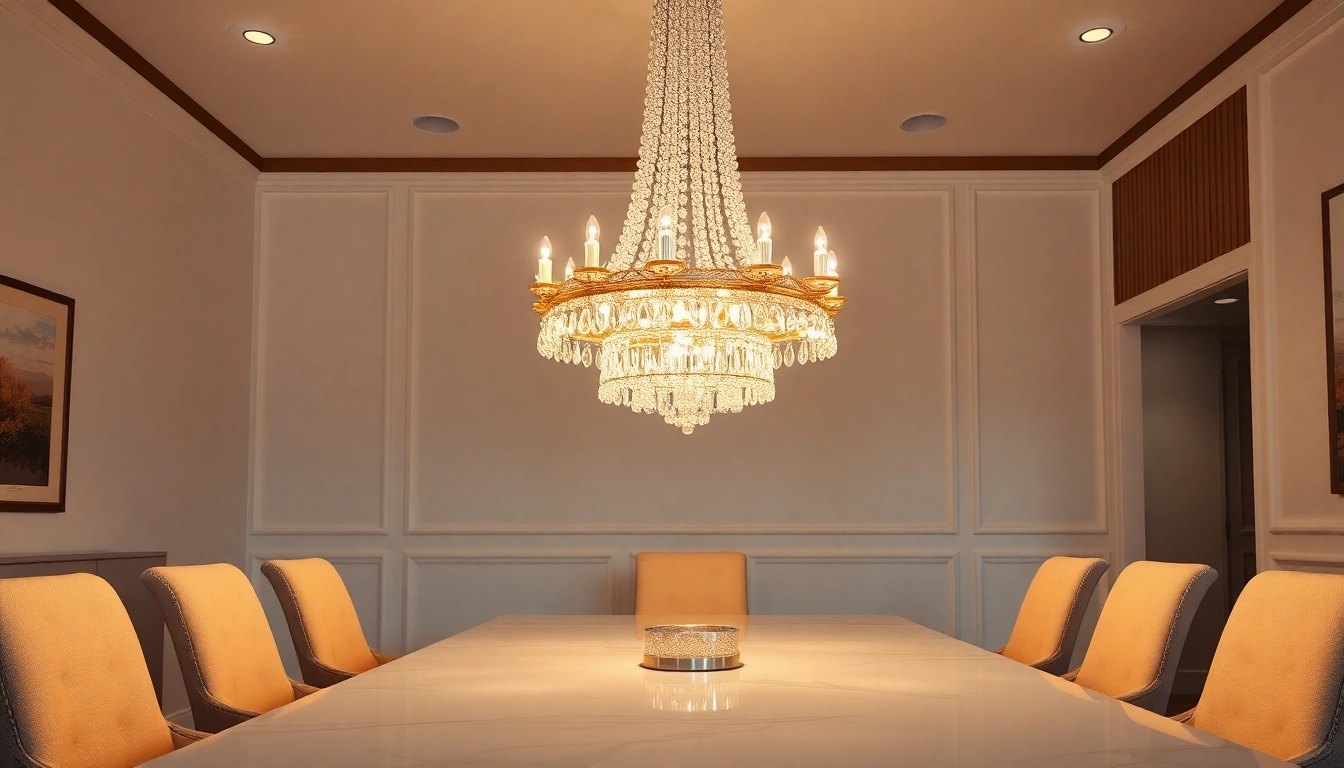
Understanding Island Chandeliers
Definition and Features of Island Chandeliers
An island chandelier is a type of lighting fixture designed specifically for illuminating long horizontal spaces, commonly found above kitchen islands or dining areas. These fixtures are typically characterized by their unique shapes, dimensions, and luminosity, which can vary widely according to design and materials used. They serve not only as functional lighting solutions but also as statement pieces that can dramatically influence the ambiance and décor of a room.
Key features of island chandeliers include adjustable heights, a diverse range of styles from modern to rustic, and the ability to accommodate multiple bulbs or light sources to provide ample illumination. The visual impact of an island chandelier is central to its appeal, making it a popular choice in contemporary home design.
Design Styles and Trends
The design landscape of island chandeliers is incredibly dynamic, reflecting current trends while also embracing timeless aesthetics. From minimalist models with clean lines to ornate fixtures adorned with crystals or intricate metalwork, there is a style to complement nearly any interior theme. A significant trend is the rise of industrial-style chandeliers, which use raw materials like metal and wood, offering a unique blend of elegance and rugged charm.
Another growing trend is the incorporation of innovative technology, such as LED lighting, which enhances energy efficiency while providing vibrant illumination. Furthermore, adaptable designs that allow customization in terms of height, color, and intensity are becoming increasingly popular, giving homeowners the freedom to tailor their lighting solutions to their specific needs.
Choosing the Right Size and Style
When selecting an island chandelier, size and style are paramount. A chandelier that is too small can appear lost in a spacious area, while one that is too large may overwhelm the room. As a rule of thumb, chandeliers over kitchen islands should hang between 30 to 36 inches above the surface, providing adequate illumination without obstructing sightlines.
Style choices should harmonize with the existing décor. For instance, a sleek, modern pendant can be ideal for a contemporary kitchen, whereas a vintage-style fixture may fit perfectly in a farmhouse setting. It’s essential to consider the overall theme of the space when making your selection, allowing the chandelier to enhance rather than clash with the environment.
Choosing the Perfect Location
Positioning Above Dining Areas
Positioning an island chandelier correctly above dining areas can significantly enhance the dining experience. The ideal height for hanging a chandelier above a dining table is approximately 30 to 36 inches from the table’s surface. This height creates an intimate atmosphere while providing sufficient light without being blinding or distracting.
Moreover, ensuring the chandelier is centered over the table is crucial for aesthetic appeal and effective illumination. Consider the size of the table when selecting the chandelier’s dimensions; a larger table may require a more expansive light fixture or even multiple smaller chandeliers to achieve balanced lighting.
Kitchen Island Lighting Considerations
Kitchen islands often serve as multipurpose space—used for meal prep, casual dining, and social gatherings. Therefore, lighting should cater to a variety of activities. An island chandelier not only fulfills functional needs by illuminating work surfaces, but also adds a decorative element to the kitchen.
When determining placement, consider the shape and size of the island. For long, narrow islands, a linear chandelier works best, while a round or square island might benefit from a pendant-style chandelier. Incorporating dimmer switches can also enhance the versatility of island lighting, allowing for adjustments based on different activities and times of day.
Enhancing Ambient Lighting in Open Spaces
Island chandeliers play a critical role in creating a cohesive lighting scheme within open-concept living spaces. By combining the chandelier with recessed lighting or accent fixtures, homeowners can achieve a layered lighting effect that balances light distribution throughout the area.
When used strategically, an island chandelier serves as a focal point, guiding the eye and helping to delineate different functional zones within an open area. This approach adds both depth and character to the space, enhancing the overall aesthetic while maintaining functionality.
Installation Tips and Best Practices
Tools Needed for Installation
The installation of an island chandelier requires specific tools to ensure it is safely and securely mounted. Basic tools include a ladder, screwdriver, wire cutters, and a voltage meter for electrical safety. Additionally, having wire connectors or electrical tape on hand is essential for completing the wiring process properly. Always read the manufacturer’s instructions thoroughly as they will provide specific guidance tailored to the product, preventing potential mishaps during the installation process.
Professional vs. DIY Installation
Whether to hire a professional or attempt a DIY installation depends on your comfort level and experience with electrical work. For those familiar with home improvement projects, installing an island chandelier can be a fulfilling task that enhances one’s home. However, hiring a licensed electrician is advisable for unexperienced individuals to ensure safety and compliance with local building codes.
Hiring a professional can also save time and guarantee a proper setup, which may include harmonizing the chandelier with existing electrical systems or ensuring that weight is properly distributed, preventing future issues such as ceiling damage or insufficient lighting.
Safety and Electrical Considerations
Safety should always be a priority during chandelier installations. Before beginning any electrical work, ensure that the power supply is turned off at the circuit breaker to avoid electrical shock. Regularly check that all connections are secure and that the chandelier is installed according to the manufacturer’s guidelines to prevent future hazards.
Additionally, consider the weight of the chandelier; it should be mounted to a ceiling beam or using appropriate anchors. If you are purchasing a chandelier with multiple bulbs, be mindful of the maximum wattage to avoid potential fire risks from overheating electrical components.
Maintenance and Care for Your Island Chandelier
Regular Cleaning Techniques
Maintaining the aesthetic appeal of an island chandelier requires regular cleaning, especially in areas prone to dust and grease, such as kitchens. To clean, dust the fixture with a soft cloth or feather duster, taking care to reach all surfaces, especially the bulbs and shades. For deeper cleaning, use a damp cloth with a gentle detergent, ensuring not to let moisture seep into electrical components.
For chandeliers with intricate design elements, such as crystals or ornamental features, consider using a specialized chandelier cleaning solution to restore shine without damaging delicate materials. Regular maintenance not only enhances appearance but also prolongs the life of the fixture.
Handling Bulb Replacement Safely
Replacing bulbs is an integral part of chandelier care. Always make sure the power supply is turned off before attempting to replace any bulbs. It’s vital to use the correct wattage as specified by the manufacturer to maintain safety and prevent damage to the fixture. When changing bulbs, allow them to cool to prevent burns, and use gloves to avoid transferring oils from your fingers to the bulbs, which could result in premature burnout.
Consider opting for energy-efficient LED bulbs, which last longer and consume less electricity, providing both environmental and cost benefits while maintaining brightness.
Addressing Common Issues
Even well-maintained chandeliers may encounter issues, such as flickering lights or uneven lighting. These problems can often be traced back to faulty wiring, a loose connection, or a blown bulb. In the case of flickering, check all connections and ensure the bulbs are securely fitted. If issues persist, consulting an electrician is advised for a thorough assessment and repair.
For those experiencing difficulty in adjusting the height or stabilization of the fixture, consider consulting the installation guide for adjustments or call a trained professional for assistance as improper installation could compromise safety.
Inspiring Island Chandelier Designs
Modern vs. Traditional Styles
When it comes to island chandelier designs, understanding the difference between modern and traditional styles can guide your selection process. Modern chandeliers often embrace a sleek, minimalist aesthetic featuring geometric shapes, metallic finishes, and clean lines, creating a sophisticated and understated look.
In contrast, traditional chandeliers may showcase elaborate designs with ornate details, such as crystal embellishments, intricate wood carvings, and a more opulent silhouette. Mixing and matching styles can also yield beautiful results, creating a unique blend that reflects your personal taste and complements existing décor.
Custom Options for Unique Spaces
For those who wish to make a bold statement with their lighting, custom island chandeliers are an excellent option. Tailored chandeliers can be designed to fit specific dimensions and style preferences, incorporating unique materials and finishes to create a one-of-a-kind piece. Collaborating with local artisans or designers can result in lamps that reflect your personal vision while also addressing the functional requirements of the space.
Custom options also allow homeowners to incorporate features like adjustable heights or integrated LED technology, enhancing both aesthetic appeal and practicality in unique settings.
Combining Chandeliers with Other Lighting Fixtures
To achieve a well-rounded lighting scheme, consider combining an island chandelier with other lighting fixtures in the surrounding area. Using pendant lights or wall sconces can amplify the overall ambiance while providing localized lighting for specific tasks. Table lamps or floor lamps can also complement chandelier lighting, creating a layered effect that enhances functionality and style.
Furthermore, using dimmers allows for customized lighting scenarios, enabling you to shift the ambiance from bright and lively during meal preparations to warm and inviting for family gatherings, thus maximizing the versatility of combined lighting strategies.
Frequently Asked Questions
1. What is the ideal height to hang an island chandelier?
The ideal height is typically 30 to 36 inches above the surface of the island or dining table to ensure proper illumination without obstructing the view.
2. How do I choose the right size chandelier for my kitchen island?
Measure the length and width of the island; the chandelier should be around 1/3 the width of the island for a balanced look.
3. Can I install an island chandelier myself?
If you have experience with electrical installations, you can attempt it. Otherwise, hiring a professional electrician is recommended for safety.
4. What type of light bulbs are best for an island chandelier?
LED bulbs are highly recommended due to their energy efficiency, longer lifespan, and brightness that can enhance your chandelier’s appeal.
5. How often should I clean my island chandelier?
It’s best to clean your chandelier every few months to prevent dust buildup and maintain its aesthetic appeal, especially in kitchens.